
The flat-roof line in the security file.
A roof pitched below five degrees is measured from above and asked of nobody. pct_flat_roof turns that measurement into a line a lender can read - for referral triage, back-book construction screens and the insurability of the security.
pct_flat_roof - the share of the roof pitched below five degrees - is on the record for 94.28% of homes in England and 89.92% across the UK, refreshed yearly. No fact find has ever asked for it.
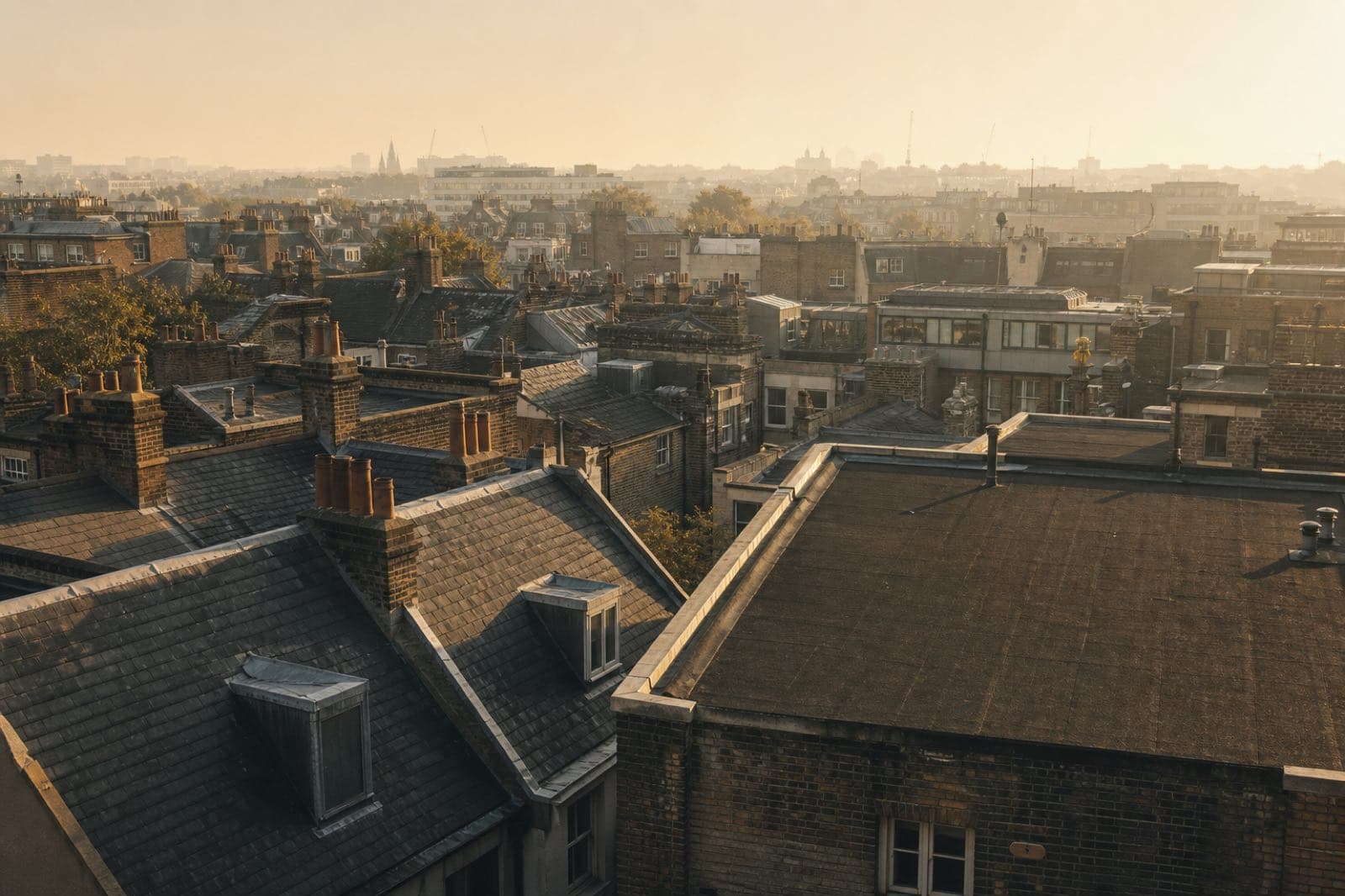
Every security file describes a roof. Almost none of them contains a fact about one. The valuer sees it from the pavement, if a valuer goes at all. The applicant is never asked, and could not answer if they were. The fact find has a box for bedrooms and a box for tenure; it has never had one for the shape of the thing keeping the weather off the collateral.
What the record holds
pct_flat_roof is that box. It records the share of a property's roof area pitched below five degrees, measured from above - from the geometry of the roof itself, not from what the street usually has or what anyone remembers. Its sibling field, roof_area, gives the area of the roof in square metres. Both sit in the Premium tier, and both are refreshed yearly.
Coverage is stated per nation, because that is where the honesty lives. The fields are on the record for 94.28% of homes in England; Wales sits at 91.61%, Scotland at 74.84%, and the UK line comes out at 89.92%. Northern Ireland is not yet covered for either field. The coverage column says so, and we would rather publish the gap than smooth it.
What a lender does with it
A roof that is mostly flat is a long-standing marker for possible non-standard construction, and construction is one of the attributes a security decision actually turns on. The policy was never the problem. The problem was that the file had no line for the policy to read. Three uses, in the order lenders reach for them:
- -Referral triage on new lending. Where the flat-roof share runs high, route the case to a desktop or a valuer before an automated value settles it. The field does not decide the case; it decides who decides it.
- -Back-book screens. Run the book against
pct_flat_roofand you have a roof-form view of stock written years ago, when nobody asked. Concentrations of predominantly flat-roofed security surface as a sorted column, not a sampling exercise. - -Insurability context. Buildings insurers ask about flat roofs before they quote. A lender whose terms require the security to stay insured can hold the same fact the insurer will ask for, per address, instead of discovering it at renewal.
A screen, not a verdict
The percentage does not say the construction is non-standard. It says look. A flat roof can be perfectly sound, and plenty of sound stock carries one. Where the referral threshold sits is an appetite decision, and it should be yours - the field's job is to make that decision possible at all.
Two habits from the rest of the catalogue carry over. The number belongs to the building in question, measured at the address rather than borrowed from the street - the same principle as the physical-risk view, applied to the fabric. And it is a line the fact find simply does not carry. An applicant answering from memory can misremember a loft conversion; nobody has ever been asked what share of their roof is pitched below five degrees. This line was measured, or it is absent. There is no polite guess to correct.
One field, one sibling, a yearly refresh and a coverage column that tells the truth. That is the flat-roof line in the security file - a small entry, and exactly the kind a ledger is for.